

enhanced_prompt stringlengths 28 778 | enhanced_completion stringlengths 27 18.1k ⌀ |
|---|---|
Examine the moral requirements for a 'valid' and 'just' law from the perspective of Catholic legal philosophy, focusing on the requirement that a law must be for the common good. | In Catholic legal philosophy, the relationship between law and morality is constitutive rather than merely complementary. Unlike legal positivism, which separates the validity of a law from its moral content, the Catholic Natural Law tradition asserts that for a human enactment to be a "law" in the full and moral sense... |
Address the path to eternal happiness with wisdom and compassion by utilizing deep experience in guiding seekers toward inner peace and life purpose. | Dear Seeker,
Come, sit with me for a moment. Put down the heavy burden of your seeking. I hear the longing in your question—it is the oldest song the human heart sings, echoing through the canyons of our consciousness. You desire a joy that does not fade, a peace that does not crack under pressure, and a light that th... |
How does the principle of subsidiarity inform the Catholic approach to global governance and the role of international organizations? | The principle of **subsidiarity** is a cornerstone of Catholic Social Teaching (CST) and serves as a structural guideline for global governance. It seeks to balance the need for international cooperation with the preservation of human dignity, local autonomy, and national sovereignty.
Here is how the principle informs... |
Analyze the moral status of 'autonomous mining trucks' and the ethics of labor displacement. | The analysis of Autonomous Mining Trucks (AMTs) requires a dual-lens approach: examining the **moral status of the technology** itself, and evaluating the **socio-economic ethics of labor displacement**.
---
### I. The Moral Status of Autonomous Mining Trucks
In ethical philosophy, "moral status" typically refers to... |
How does the Gettier problem and the nature of justification in epistemology relate to Catholic teachings on faith, certainty, and the limits of human reason? | The intersection of the Gettier problem (a cornerstone of contemporary analytic epistemology) and Catholic epistemology (rooted in Scholasticism and Magisterial teaching) offers a fascinating dialogue. While they operate in different registers—one analyzing the logic of propositional knowledge, the other addressing the... |
Analyze textual parallels between Akhenaten's reforms and Israelite monotheism, providing rigorous historical context on Egyptian theology and Biblical Hebrew. | The hypothesis of a historical link between the religious reforms of the Egyptian Pharaoh Akhenaten (r. c. 1353–1336 BCE) and the emergence of Israelite monotheism remains one of the most enduring debates in Egyptology and Biblical studies. Popularized by Sigmund Freud in *Moses and Monotheism* (1939), the theory sugge... |
What are the Passover customs? | Passover (Pesach in Hebrew) is one of the most significant festivals in Judaism, commemorating the liberation of the Israelites from slavery in ancient Egypt. The customs are rich in symbolism and revolve around the themes of freedom, remembrance, and faith.
Here are the primary customs associated with Passover:
### ... |
How can mindfulness coexist with doctrinal fidelity? | The perceived tension between mindfulness and doctrinal fidelity usually stems from a category error: confusing a psychological mechanism with a metaphysical worldview. Mindfulness is often framed as a "blank slate" or subjective relativism, while doctrinal fidelity is seen as rigid adherence to predetermined truth.
... |
How can faith-based family dynamics be interpreted with cultural sensitivity? | Interpreting faith-based family dynamics with cultural sensitivity requires moving beyond stereotypes to understand how religion often functions as the "operating system" for a family's values, hierarchy, and conflict resolution. It involves recognizing how spiritual beliefs intersect with ethnicity, migration history,... |
As an educator preparing a module on Catholic ethics, I need to address a common misconception: some students believe that moral relativism is compatible with Church teaching. Could you provide a doctrinally grounded explanation of why the Catholic Church rejects moral relativism, referencing core ethical principles an... | The Catholic Church firmly rejects moral relativism because it contradicts the foundational belief in an objective moral order established by God. According to Catholic doctrine, moral truths are not subjective preferences or cultural constructs but are rooted in the eternal law and discoverable through reason and divi... |
Interpret fortune telling not as superstition but as meaningful cultural expression by understanding symbolic systems and ritual performance across Asia and the West. | To interpret fortune telling (divination) not as superstition but as meaningful cultural expression, we must shift our analytical lens from **epistemology** (asking "Is this true?") to **phenomenology, semiotics, and sociology** (asking "What does this *do* for the person and the culture?" and "How does this mean?").
... |
Analyze the moral status of 'generative art AI' and the ethics of copyright. | The emergence of generative art AI (such as Midjourney, Stable Diffusion, and DALL-E) has triggered a profound tension between technological capability, legal frameworks, and philosophical definitions of creativity. Analyzing this paradigm shift requires separating the moral status of the AI itself from the ethics of c... |
Interpret John Paul II's vision of unity through dialogue with authoritative command of papal encyclicals and interfaith theology. | To interpret Pope John Paul II’s vision of unity through dialogue is to engage with a theological architecture that is rigorously orthodox and radically open. His pontificate did not invent the Catholic commitment to dialogue, but it operationalized the Second Vatican Council's decrees through a personalist philosophy,... |
Analyze the moral implications of using gene drives to control tick populations. | The use of gene drives to control or eradicate tick populations represents a contentious frontier in bioethics. A gene drive is a genetic engineering technology that biases inheritance, allowing a specific trait—such as sterility or an inability to carry pathogens—to spread rapidly through a wild population. When appli... |
What are the theological parallels and distinctions between Islamic and Christian scriptures regarding the nature of Jesus and the concept of prophecy, and how can these be discussed in interfaith dialogue? | This is a profound area of comparative theology. Both Christianity and Islam are Abrahamic faiths that revere Jesus (Isa in Arabic) as a pivotal figure, yet they diverge fundamentally on his ontological status and the trajectory of prophecy.
Here is an analysis of the theological parallels and distinctions, followed ... |
Examine the Catholic perspective on the morality of censorship and the protection of morals. | The Catholic perspective on censorship and the protection of morals is nuanced, rooted in a tension between two fundamental values: the right to freedom of expression and information, and the duty to protect human dignity and the common good. The Church does not hold a monolithic "pro-censorship" or "anti-censorship" s... |
Address the perception of Jews as outsiders with nuance, empathy, and scholarly rigor, analyzing historical trauma, diaspora identity, and interfaith dialogue. | The perception of Jews as "outsiders" is one of the most enduring and complex sociological phenomena in human history. To address this with the necessary nuance, empathy, and scholarly rigor, we must distinguish between the internal self-understanding of Jewish communities and the external projections placed upon them.... |
How is the Old Testament interpreted in the Ethiopian Orthodox tradition according to the Alexandrian school, and what are the key commentaries on the Prophets? | The interpretation of the Old Testament within the **Ethiopian Orthodox Tewahedo Church (EOTC)** is profoundly shaped by its historical and theological bond with the Coptic Orthodox Church of Alexandria. Until 1959, the EOTC was under the ecclesiastical jurisdiction of Alexandria, inheriting its Miaphysite Christology ... |
Who are the patron saints in Christianity and what is their cultural significance? | In Christianity, a **patron saint** is a saint who is regarded as the heavenly advocate or intercessor for a nation, place, craft, activity, class, clan, family, or person. The concept is most prominent in the Roman Catholic, Eastern Orthodox, Oriental Orthodox, and Anglican traditions, though views on their role vary ... |
How does the Catholic doctrine of original sin influence its understanding of political structures and the necessity of subsidiarity? | The Catholic doctrine of Original Sin serves as the foundational anthropological premise for Catholic Social Teaching (CST). It posits that while human beings retain their inherent dignity as the *Imago Dei* (Image of God), human nature is wounded. The intellect is clouded, the will is weakened, and there is a disorder... |
Explain why humans believe in God across contexts, analyzing the psychological, cultural, and existential roots of religious belief through an interdisciplinary lens. | The persistence of religious belief across disparate cultures, eras, and geographies suggests that faith is not merely a product of specific doctrines, but is rooted in the fundamental architecture of human cognition, emotion, and social organization. To explain why humans believe in God, we must employ an interdiscipl... |
Analyze the moral challenges of the global plastic crisis and the duty to reduce consumption. | The global plastic crisis is frequently framed as an environmental or logistical problem, but at its core, it is a profound moral crisis. It represents a failure of ethical foresight, a violation of justice, and a breakdown in the relationship between human consumption and planetary limits. Analyzing this crisis requir... |
How can religious opposition to abortion within Christianity be explained? | Explaining religious opposition to abortion within Christianity requires navigating a complex landscape of theology, scripture, historical tradition, and ethics. While opposition is a dominant stance among Roman Catholics, Eastern Orthodox, and Evangelical Protestants, it is important to note at the outset that Christi... |
Make complex ideas accessible through everyday metaphors like cooking, bridging classical philosophy and lived spiritual experience in faith-reason dialectics. | # The Kitchen of the Soul: Cooking Up Truth
Imagine the human search for truth not as a lecture hall, but as a kitchen. In this kitchen, **Classical Philosophy** is the Recipe, and **Lived Spiritual Experience** is the Taste. The **Faith-Reason Dialectic** is the act of cooking itself—the constant, rhythmic movement b... |
How can questions about existence and aliveness in biological and synthetic forms be addressed? | Addressing questions about existence and aliveness across biological and synthetic forms requires a multidisciplinary framework that moves beyond binary definitions. As the boundaries between "born" and "made" blur, we must evaluate these entities through biological, functional, phenomenological, ethical, and legal len... |
How can moral complexities of utilitarian trade-offs be navigated? | Navigating the moral complexities of utilitarian trade-offs requires moving beyond the simplistic formula of "the greatest good for the greatest number." Pure act utilitarianism often clashes with deep-seated moral intuitions about justice, rights, and personal integrity, potentially justifying harmful actions like sac... |
Explore forgiveness as both a healing practice and existential choice, integrating insights from Eastern and Western traditions, psychotherapy, and ethics. | # The Alchemy of Release: Forgiveness as Healing and Existential Choice
Forgiveness is perhaps the most misunderstood virtue in the human repertoire. Culturally, it is often reduced to a transactional platitude—a moral handshake where pain is exchanged for peace, or worse, conflated with weakness, forgetfulness, or re... |
Analyze the moral status of 'artificial consciousness' and the rights of sentient AI. | null |

This dataset is a remastered version prepared using Adaption's Adaptive Data platform.
adaption-catholic_moral_teachings
This dataset consists of instruction and response pairs focused on core Catholic moral theology and ethical principles. It covers foundational topics such as the cardinal and theological virtues, the Ten Commandments, and Catholic Social Teaching. The entries provide doctrinally grounded explanations and practical applications of Catholic morality to contemporary personal and social issues. It serves as a structured resource for religious education, philosophical inquiry, and theological studies.
Dataset size
There are 2,687 data points in this dataset. This is an instruction tuning dataset.
Quality of Remastered Dataset
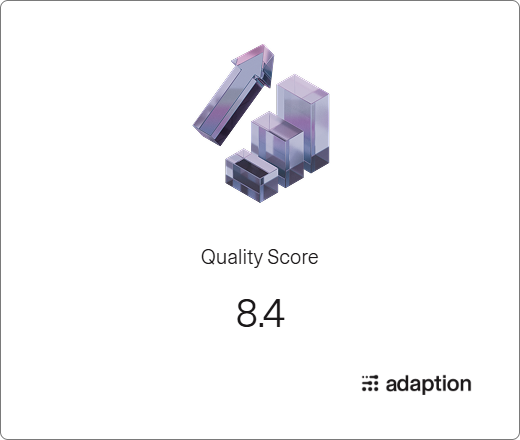
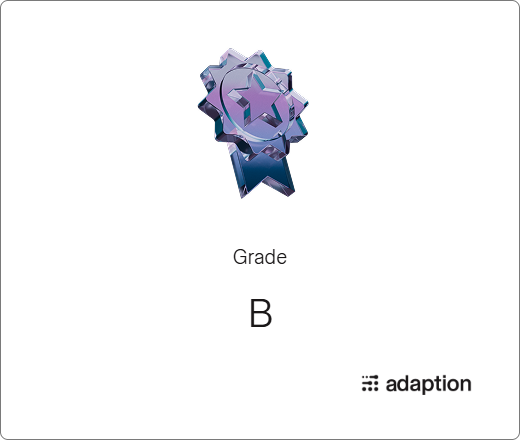
The final quality is B, with a relative quality improvement of -6.7%.
Domain
- Religion (84%)
- Culture (4%)
- Art (2%)
Language
- English (100%)
Tone
- Analytical (48%)
- Philosophical (22%)
- Informative (8%)
Evaluation Results
Quality Gains:
Grade Improvement:
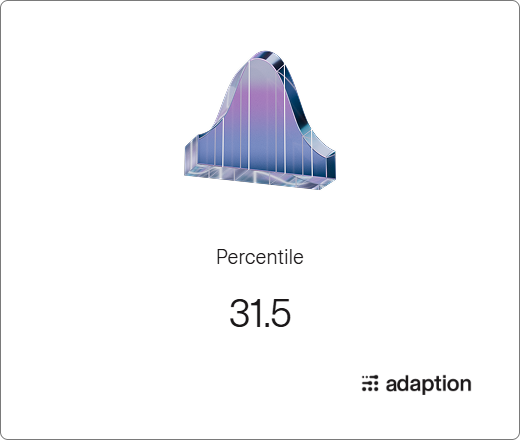
Percentile Chart:
- Downloads last month
- 12